Packing gets harder when one trip includes more than one kind of weather. Warm afternoons, chilly mornings, rain, wind, air-conditioned airports, and changing destinations can make it tempting to pack clothing for every possible situation. That usually means bringing far more than you actually wear.
A better approach is to build a small wardrobe that can adjust as conditions change. Choosing pieces that layer well, work together, and serve more than one purpose makes it much easier to pack for different climates without filling an entire suitcase.
Check the Weather for Every Stop
Start by checking the forecast for every destination on the itinerary rather than focusing only on where the trip begins. Look beyond the daytime high and pay attention to overnight lows, rain, wind, humidity, and how sharply temperatures change throughout the day.
The National Weather Service is useful for U.S. destinations, while international forecasts can be checked through your preferred weather service. Check conditions again shortly before leaving, particularly during spring and fall when forecasts can shift quickly.
Pack Mostly for the Climate You Will Experience Most
A seven-day warm-weather trip with two cool evenings does not require half a suitcase of cold-weather clothing. Pack primarily for the conditions you will encounter most often, then use a few strategic layers to cover the less common weather.
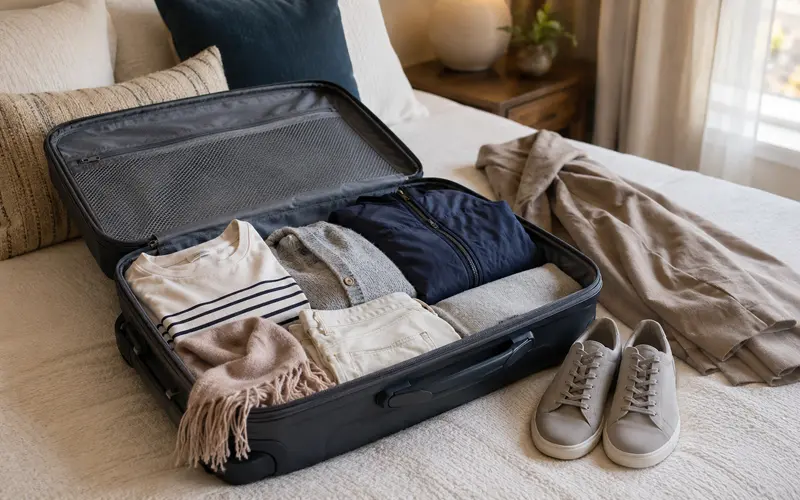
For example, a short-sleeve shirt and lightweight pants might work during the day. A cardigan can handle a cooler evening, while a compact jacket adds another layer if temperatures drop further. One basic outfit can now work across several conditions.
Small accessories can provide extra flexibility without using much suitcase space. A hat and sunglasses make sense for sunny days, while a lightweight scarf or pair of gloves may be enough for a brief stretch of colder weather.
Use Three Layers Instead of Separate Outfits
Think about clothing in three possible layers:
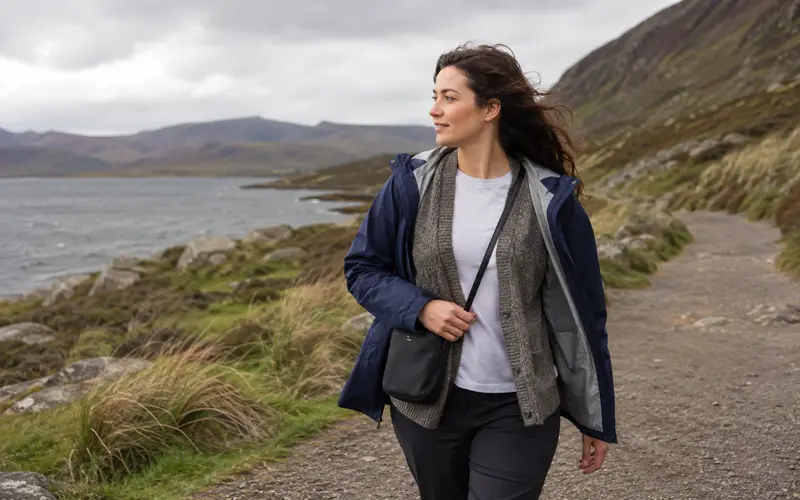
- Base layer — the shirt, blouse, dress, or other piece comfortable enough to wear alone in the warmest weather.
- Middle layer — a cardigan, sweater, fleece, or lightweight pullover for added warmth.
- Outer layer — a rain jacket, windbreaker, or insulated jacket that protects against the coldest or wettest conditions expected.
The pieces should work together physically as well as visually. A sweater that will not comfortably fit underneath your jacket limits your options, even if you like both pieces individually.
Trips that include significant time outdoors in colder temperatures require more specialized planning. Proper layers, moisture management, and weather protection become especially important when planning a winter outdoor adventure.
Build a Small Mix-and-Match Wardrobe
Packing fewer clothes only works when those clothes can be worn in several combinations. Choosing a loose color palette makes this much easier without requiring an entirely neutral wardrobe.
Start with two or three basic colors for pants, shorts, skirts, and jackets, then bring tops that coordinate with most of them. A few colorful or patterned pieces can keep everything from looking repetitive.
Before putting something into the suitcase, consider two questions:
- Can I wear this more than once?
- Does it work with at least two other things I am bringing?
If the answer to both is no, that item is a good candidate to leave home.
Choose Fabrics That Match the Conditions
The fabric itself can determine whether a piece works across several climates.
| Conditions | Useful Fabric Qualities |
|---|---|
| Hot and humid | Lightweight, breathable, moisture-friendly |
| Rainy | Quick-drying and easy to layer |
| Cool | Lightweight insulation without excessive bulk |
| Cold | Warmth, moisture management, and effective layering |
| Mixed climates | Fabrics comfortable alone but thin enough to layer |
Cotton and linen can feel comfortable in warm weather, while lightweight performance fabrics are useful for humidity and active days. Merino wool and fleece can add warmth without requiring several heavy sweaters.
Quick-drying clothing is especially useful on longer trips because it is easier to wash and rewear, reducing the total number of pieces you need to pack.
Let Warm-Weather Pieces Do Double Duty
A lightweight shirt should not have only one job. The same top might work with shorts during a warm afternoon, pants for sightseeing, and a cardigan for dinner when temperatures cool.
Dresses, lightweight pants, simple tops, and sandals can also move easily between sightseeing and time near the water. That versatility is particularly helpful when packing for a beach vacation that includes activities beyond the beach itself.
The more situations each piece can handle, the less clothing you need to bring.
Limit the Number of Shoes
Shoes consume a surprising amount of luggage space, especially when you begin packing a different pair for every possible activity.
For many vacations, two or three pairs are enough:
- Comfortable walking shoes for sightseeing
- Sandals, flats, or another lightweight option
- Weatherproof footwear only when the expected conditions require it
Wear the bulkiest pair while traveling rather than packing it. Smaller shoes can then fit around clothing or along the sides of the suitcase.
Make Your Travel-Day Outfit Part of the Plan
The clothing you wear to the airport does not need to be separate from the rest of your wardrobe. Travel day is a good opportunity to wear pieces that would otherwise take up the most suitcase space.
Wear your largest shoes and carry your sweater or jacket onto the plane. A scarf can provide warmth in a cold cabin and become part of an outfit later in the trip.
Keep smaller travel essentials somewhere easy to reach so you are not opening your main suitcase every time you need headphones, a charger, medication, or another frequently used item.
Prepare for Rain Without Packing Another Wardrobe
Rain usually does not require completely different clothing. A packable water-resistant or waterproof jacket can handle many wet-weather situations while taking up far less room than a heavy coat.
A compact umbrella can be useful in destinations where rain is likely, but footwear matters just as much. Spending several hours sightseeing in soaked shoes can ruin an otherwise perfectly good day.
If frequent rain is expected, bring at least one pair of shoes that can tolerate wet conditions and choose clothing that will dry relatively quickly if it gets damp.
Lay Out Complete Outfits Before Packing
Instead of putting individual pieces straight into the suitcase, lay everything out first and create complete outfits. This makes duplicate and unnecessary clothing much easier to spot.
Three bottoms and five tops already provide numerous combinations before adding a cardigan, jacket, scarf, or other accessories. You can even photograph the combinations with your phone so you do not have to remember what you intended to wear together.
Packing cubes can help keep those pieces organized once you have narrowed everything down, especially when one suitcase contains clothing for several different types of weather.
A Sample Warm-to-Cool Packing List
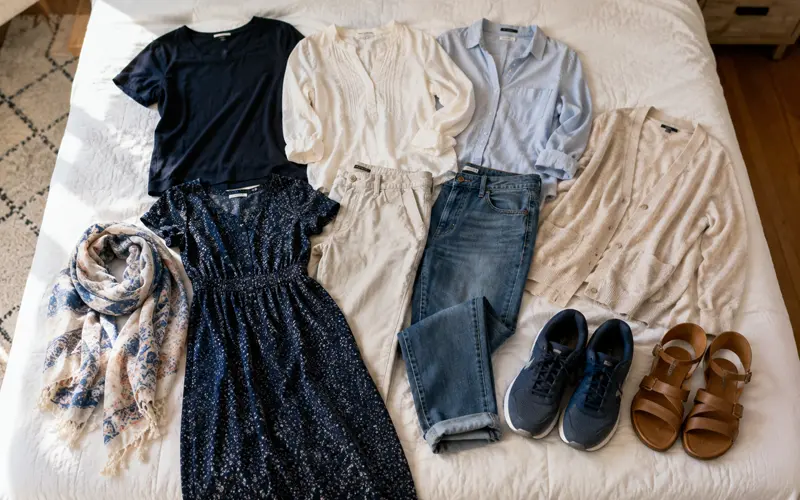
For a weeklong trip that begins in warmer weather and includes several cooler days, a flexible wardrobe might include:
- 4–5 lightweight tops
- 2 pairs of pants or jeans
- 1 pair of shorts or a skirt
- 1 casual dress, if you wear dresses
- 1 cardigan or lightweight sweater
- 1 warmer middle layer
- 1 packable weather-resistant jacket
- 1 scarf
- 1 pair of comfortable walking shoes
- 1 pair of sandals, flats, or other lightweight shoes
- Undergarments, socks, and sleepwear
The exact quantities will depend on the length of the trip and whether laundry is available. The goal is not to follow a rigid formula but to make sure most pieces can be worn in several different combinations.
What Can Stay Home
The easiest way to reduce luggage is often to remove the items packed for unlikely situations.
Leave behind multiple heavy sweaters when one versatile option will work, shoes that match only one outfit, duplicate jackets, and clothing you have never worn before. Full-size toiletries are rarely necessary for a short trip, and several dressy outfits do not make sense unless the itinerary includes several dressy events.
The TSA list of items allowed in carry-on and checked luggage is also worth checking when you are unsure where a particular travel item belongs.
Pack for Flexibility
Packing for different climates does not mean preparing for every weather condition that could possibly occur. It means bringing pieces that can adapt when the temperature or conditions change.
Build most of the suitcase around the climate you will experience most often; add a few useful layers; limit