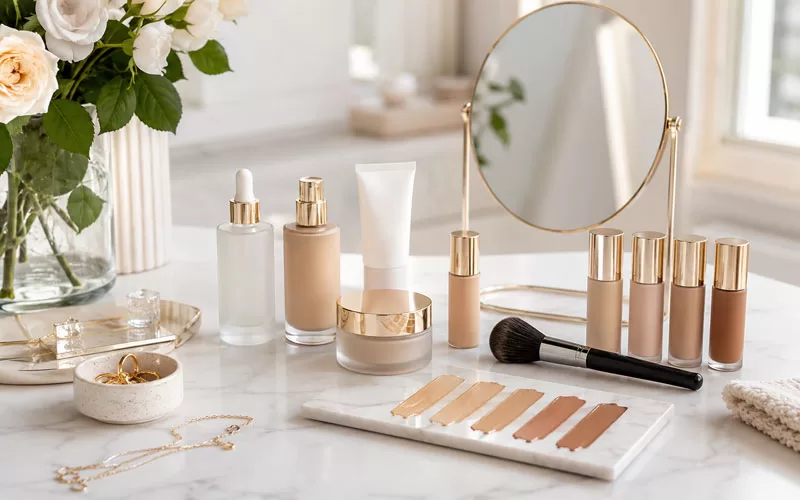
Finding your skin tone sounds like it should be simple, but if you have ever stood in the makeup aisle staring at foundation bottles, you already know it can get confusing fast. Your skin tone can affect the makeup shades you choose, the clothing colors that flatter you, the jewelry that looks best, and even the hair colors that feel most natural. It can also help when choosing lighter makeup and easy summer colors that still feel fresh in hot, humid weather.
I used to think finding your skin tone meant simply deciding whether you were fair, medium, or deep, but undertone is usually the piece that makes the biggest difference. You can be fair with warm undertones, medium with cool undertones, or deep with neutral undertones. That is why a simple skin tone finder approach can be so helpful.
These at-home tests are not meant to be perfect or overly technical. Think of them as a starting point to help you understand what usually looks best on your skin.
What Is the Difference Between Skin Tone and Undertone?
Skin tone is the surface color of your skin. It is usually described as fair, light, medium, tan, deep, or rich. Your skin tone can shift a little throughout the year, especially if you spend more time in the sun or use self-tanner.
Undertone is the subtle color underneath the surface of your skin. It is usually warm, cool, or neutral. Your undertone tends to stay more consistent, even when your surface skin tone changes.
| Term | What It Means | Can It Change? |
|---|---|---|
| Skin tone | The visible surface color of your skin | Yes, with sun exposure, tanning, redness, or seasonal changes |
| Undertone | The subtle warmth, coolness, or neutrality beneath your skin | Usually more consistent |
| Why it matters | Helps with makeup, clothing, jewelry, and hair color choices | It gives you a better starting point |
A foundation shade might be the right depth, but still look wrong if the undertone is off. That is usually when makeup looks too yellow, too pink, too orange, or a little gray.
Skin Tone Finder: 5 Easy At-Home Tests
There is no single skin tone finder test that works perfectly for everyone, so it helps to try a few. Natural light is best, and it is a good idea to check your skin when you are not wearing makeup.
1. White Paper Test
Hold a plain white piece of paper next to your clean face or neck in natural light. Look at how your skin appears against the white background.
If your skin looks more yellow, golden, or peachy, you may have a warm undertone. If your skin looks more pink, rosy, red, or bluish, you may have a cool undertone. If you see a mix of both, or nothing stands out strongly, you may be neutral.
This test can be tricky if your skin is flushed, irritated, or recently tanned, so do not rely on it alone.
2. Vein Test
Look at the veins on the inside of your wrist in natural light. If they appear greener, you may lean warm. If they look more blue or purple, you may lean cool. If they seem somewhere in between, you may be neutral.
This is one of the most common undertone tests, but it is not always obvious. Some people’s veins are hard to see, and lighting can change how they appear.
3. Jewelry Test
Think about whether gold or silver jewelry tends to look better against your skin. If gold makes your skin look brighter, you may lean towards warm. If silver looks cleaner and more flattering, you may lean cool. If both look good, you may have a neutral undertone.
Personally, I think this is one of the easier tests because it connects to real life. If you already reach for certain jewelry because it makes you feel more pulled together, that can be a helpful clue.
4. Sun Reaction Test
How your skin reacts to the sun can sometimes offer clues. If you tan easily and rarely burn, you may lean warm. If you burn quickly or turn pink before tanning, you may lean cool. If you do a little of both, you may be neutral.
This is only a general clue, not a rule. Sunscreen, skin sensitivity, medications, and time of day can all affect how your skin reacts.
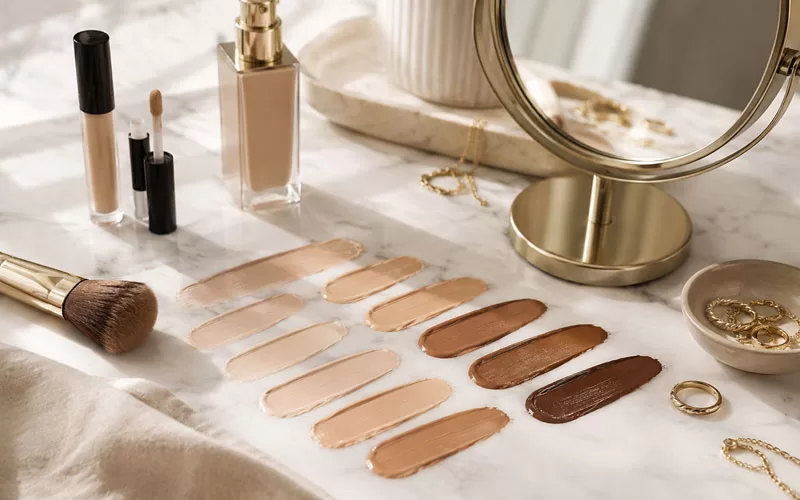
5. Foundation Match Test
If you already own foundation, look at the shades that have worked best for you. Many foundations include undertone clues in the shade name, such as warm, cool, neutral, golden, beige, rosy, or olive.
Test foundation along your jawline instead of your hand. Your hand may be a different color than your face, especially if you spend a lot of time driving, walking outside, or using skincare products on your face that you do not use on your hands.
For an extra check, you can also use a foundation shade tool like the Sephora Shade Finder or the Ulta Beauty Shade Finder. I would still treat those as a helpful starting point, not a final answer.
Warm, Cool, or Neutral Undertone Chart
| Undertone | What You May Notice | Colors That Often Work |
| Warm | Yellow, golden, peachy, or olive tones | Gold, cream, coral, olive, camel, warm browns |
| Cool | Pink, red, rosy, or bluish tones | Silver, jewel tones, crisp white, navy, berry |
| Neutral | A mix of warm and cool tones | Soft neutrals, rose gold, balanced shades, muted colors |
These color suggestions are not strict rules. The best colors are still the ones you actually enjoy wearing, but undertone can explain why some shades look easy, and others feel a little off.
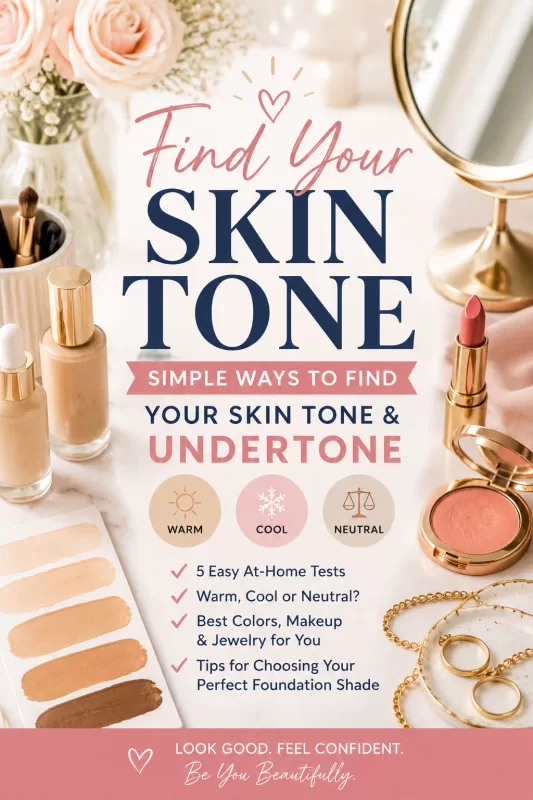
Here is a quick visual guide you can save or reference when you are comparing warm, cool, and neutral undertones. It is a simple reminder of what to look for when choosing makeup, clothing colors, and jewelry.
What If You Still Can’t Tell?
If you still cannot tell your undertone, you are not alone. Some people are clearly warm or cool, but many people fall somewhere in the middle.
Lighting can make a big difference. Bathroom lighting, car mirrors, and even the type of bulbs you use at home can change how your skin and makeup shades appear. I have noticed this most when something looks fine indoors and then suddenly looks different in natural light, which is why checking your undertone near a window is usually more helpful than relying on one mirror.
If your bathroom lighting always makes makeup colors look a little off, it may be worth comparing soft white and daylight bulbs so you know what kind of light you are actually using.
Redness can also make undertone confusing. If your cheeks are naturally pink, irritated, or flushed, you might assume you are cool-toned even if the rest of your skin leans neutral or warm. Tanning, self-tanner, skincare products, and even what you are wearing can also affect what you see.
When in doubt, neutral shades are usually the safest place to start. You can always adjust warmer or cooler from there.
How to Use Your Undertone for Makeup
Once you have a better idea of your undertone, makeup becomes easier to choose. You do not have to follow every “rule,” but undertone can help you waste less money on products that look good in the bottle but not on your face.
Foundation
Try to match both depth and undertone. The right foundation should blend into your jawline without looking yellow, pink, orange, or ashy. If your face and neck are slightly different colors, aim for a shade that helps them look balanced.
Concealer
Decide what you need it to do. A concealer that matches your skin can cover blemishes or redness. A slightly brighter concealer can work under the eyes, but going too light can look harsh or chalky.
Blush
Warm undertones often look nice in peach, coral, apricot, and warm rose shades. Cool undertones often work well with pink, berry, mauve, and soft plum shades. Neutral undertones can usually wear a mix, depending on the rest of the makeup.
Lip Color
Lip color follows the same idea. Warm undertones often pair well with peachy nude, warm pink, coral, terracotta, or brick shades. Cool undertones often look great in rosy nude, berry, mauve, blue-red, or soft plum shades.
Bronzer
Bronzer can be one of the trickiest products. If bronzer looks orange, it may be too warm. If it looks muddy or gray, it may be too cool or too deep. A softer, buildable bronzer is usually easier to work with than one that is highly pigmented right away.
If you are also trying to simplify your routine, my over-50 skincare routine is very realistic and low-maintenance. A consistent skincare routine before bed can also help your makeup apply more smoothly the next day, especially if dryness or texture makes shade matching harder. I only wear full makeup a few days a week, so when I do wear it, I want the shades to actually work.
How to Use Your Undertone for Clothes and Jewelry
Undertone can also help with clothing and jewelry choices. You may notice that certain colors make your skin look brighter, while others make you look tired even when you feel fine.
Warm undertones often look good in cream, camel, olive, rust, coral, warm red, and earthy colors. Cool undertones often look good in crisp white, navy, emerald, sapphire, berry, lavender, and cool gray. Neutral undertones can usually wear a wider mix, especially softer shades that are not too extreme in either direction.
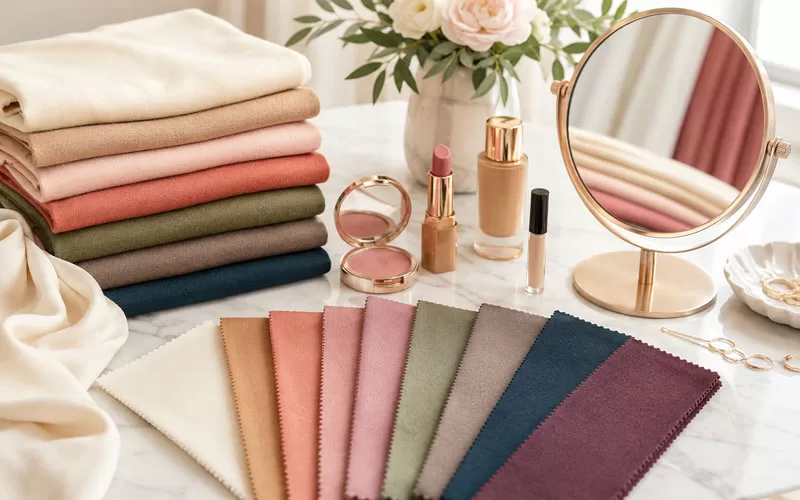
Jewelry can be a simple way to test this. Gold often flatters warm undertones, silver often flatters cool undertones, and rose gold can look beautiful on neutral skin. But again, this is not a rule. If you love a certain piece of jewelry and it makes you feel good, wear it.
The goal is not to limit yourself. It is to understand why some colors feel effortless, and others take more work. Feeling good in the colors and products you choose is also part of building everyday confidence in how you present yourself, not about following strict beauty rules.
Final Thoughts
A skin tone finder test can help you get closer to your best makeup shades, clothing colors, jewelry metals, and hair color ideas, but it is not meant to be a perfect science. Try a few tests, look for patterns, and give yourself room to be somewhere in the middle.
Your skin tone can change with sun exposure, seasonal color, self-tanner, or redness, but your undertone usually stays more consistent. Once you understand that difference, choosing colors becomes a little less frustrating.
And if you are still unsure, start neutral. It is often the easiest place to begin while you figure out what makes you feel most like yourself.