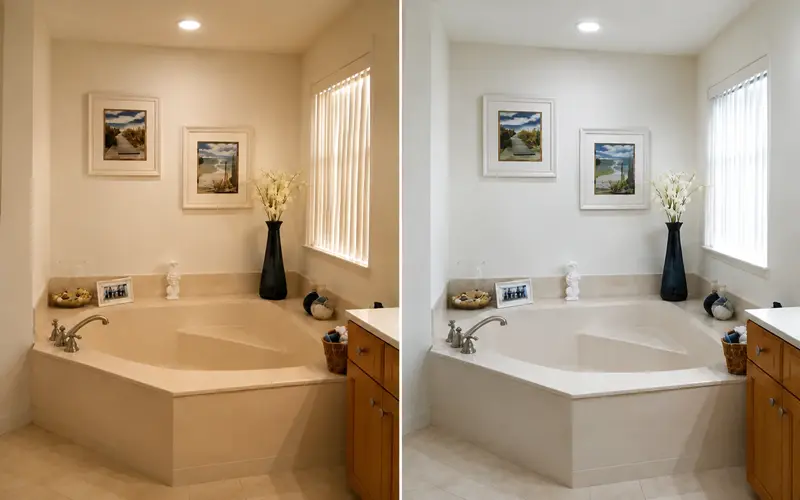
Choosing between soft white vs daylight light bulbs can completely change how a room looks and feels. Soft white produces a warmer, slightly yellow glow, while daylight creates a cooler, brighter-looking white light. I tested both types in the same bathroom, and the real before-and-after photos make the difference much easier to see than descriptions on a light bulb package.
The best choice depends on the room and how you use it. Soft white generally feels more comfortable in bedrooms and living spaces, while daylight can provide the clearer light many people prefer in bathrooms, kitchens, offices, garages, and other task-oriented areas.
Quick Answer: Soft White vs Daylight
Soft white bulbs produce warm, cozy light that resembles the familiar glow of traditional incandescent bulbs. They are commonly labeled between 2700K and 3000K.
Daylight bulbs produce cooler white light that can appear brighter, crisper, or slightly blue. They are commonly labeled between 5000K and 6500K.
For a simple rule:
- Choose soft white for rooms where you relax.
- Choose daylight for spaces where you want clear visibility.
- Choose bright white when you want something between the two.
Soft White vs Daylight Comparison
| Bulb Type | Typical Kelvin Range | Appearance | Common Uses |
|---|---|---|---|
| Soft white | 2700K–3000K | Warm, soft, slightly yellow | Bedrooms, living rooms, dining rooms |
| Bright white | 3500K–4100K | Neutral, clean white | Kitchens, offices, multipurpose spaces |
| Daylight | 5000K–6500K | Cool, crisp, slightly blue | Bathrooms, garages, laundry rooms, task lighting |
The Kelvin number describes the color of the light, not its brightness. A lower Kelvin number looks warmer and more yellow, while a higher number looks cooler and more blue. The ENERGY STAR light bulb guide recommends using lumens—not watts or Kelvin—to compare the actual amount of light a bulb produces.
Soft White vs Daylight Before and After Photos
The most useful part of this comparison is seeing soft white and daylight bulbs in the same room. I changed the bulbs in our bathroom without changing the fixtures, paint, cabinetry, or décor, so the photographs show how much the color temperature alone affected the space.
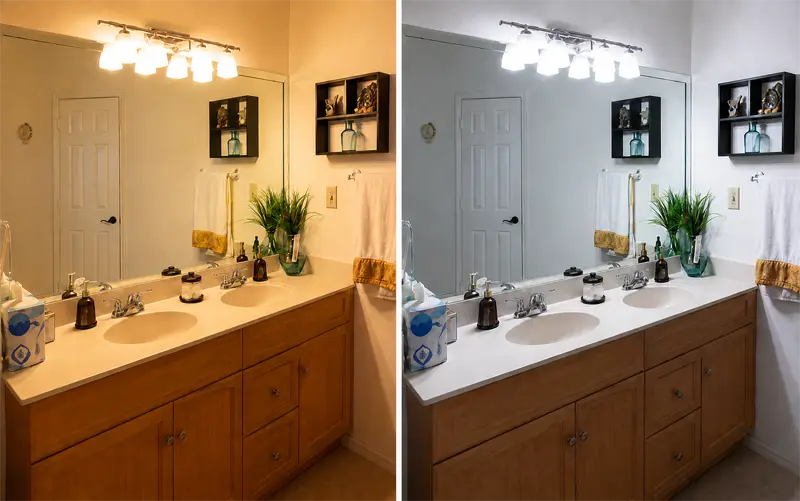
With soft white bulbs, the bathroom had a warmer, slightly yellow appearance. The light felt softer and more relaxed, but some of the room’s colors and details appeared muted.
With daylight bulbs, the same bathroom looked cooler, whiter, and more clearly illuminated. The room appeared cleaner and crisper, and it was easier to see details around the vanity and mirror.
The daylight bulbs did not necessarily produce more lumens than the soft white bulbs. Their cooler color made the room appear brighter to my eyes, which is an important distinction when comparing daylight vs soft white bulbs.
Soft White Lighting in the Bathroom

The soft white bulbs created a warm glow throughout the bathroom. This lighting can be a good choice when you want the room to feel relaxing, especially in a guest bathroom or a bathroom primarily used for evening baths.
The downside was that the warmer color added a yellow cast to the room. It changed how the paint, countertops, and other finishes appeared and did not provide the crisp visibility I wanted around the mirror.
Daylight Lighting in the Bathroom

After switching to daylight bulbs, the bathroom looked cooler and noticeably clearer. The whiter light made it easier to see details while applying makeup, getting ready, and cleaning.
I prefer daylight bulbs in our bathroom because visibility is more important to me in this space than creating a warm atmosphere. Someone who wants a softer, spa-like bathroom may still prefer soft white, but the before-and-after photographs demonstrate why daylight was the better choice for us.
What Is the Main Difference Between Soft White and Daylight Bulbs?
The main difference between a soft white and daylight bulb is color temperature. Color temperature is measured in Kelvins and describes whether white light appears warm and yellow or cool and blue.
Soft white bulbs usually fall between 2700K and 3000K. This is close to the warm appearance many people associate with traditional incandescent lighting.
Daylight bulbs generally fall between 5000K and 6500K. They are designed to resemble the cooler color of natural daylight and may make fine details and contrast easier to see.
Bright white bulbs usually fall between those two ranges. They provide a more neutral white light without as much yellow as soft white or as much blue as daylight.
Color Temperature Is Not the Same as Brightness
It is easy to assume that daylight bulbs are always brighter than soft white bulbs, but Kelvin and brightness measure different things.
- Kelvin tells you the color of the light.
- Lumens tell you how much light the bulb produces.
- Watts tell you how much energy the bulb uses.
Two LED bulbs can produce the same number of lumens while looking very different because one is soft white and the other is daylight. When shopping, compare both the Kelvin rating and lumen output rather than relying only on words such as “soft,” “bright,” or “daylight.”
Modern LEDs are available in many color temperatures and use significantly less energy than traditional incandescent bulbs. The U.S. Department of Energy’s LED overview explains how LED technology produces white light and why color quality can vary among products.
Soft White vs Daylight Bulbs by Room
There is no single color temperature that is perfect for every room. The right choice depends on whether you want warmth and relaxation or sharper visibility for specific tasks.
Living Room
Soft white is usually the better choice for a living room. Its warmer glow feels comfortable while relaxing, watching television, reading, or spending time with family.
Daylight can feel harsh when used as the main overhead light in a living room. If you need brighter task lighting, consider using it only in a reading lamp or workspace rather than throughout the room.
Bedroom
I prefer soft white bulbs in bedrooms because the warmer light feels calmer in the evening. Daylight bulbs can look overly bright or cool when you are trying to relax before bed.
A daylight or bright white bulb may still be useful at a dressing table or inside a dark closet, but soft white generally works better as the room’s primary lighting.
Bathroom
Daylight is my choice for bathrooms where people apply makeup, shave, clean, or get ready for the day. It provides the crisp appearance shown in my before-and-after photographs.
Soft white may be preferable in a bathroom designed primarily for relaxing baths. You can also combine soft ambient lighting with brighter vanity lighting instead of choosing one color for every fixture.
If you are planning a larger bathroom update, hiring a bathroom fitter before choosing fixtures and lighting can help ensure everything works together properly.
Kitchen
Bright white or daylight bulbs usually work well in kitchens because clear lighting helps with cooking, food preparation, reading labels, and cleaning.
Bright white is a useful middle ground when full daylight feels too cool, particularly when the kitchen opens into a warmer living or dining area.
Home Office, Laundry Room, and Garage
Daylight bulbs can be helpful in workspaces and utility rooms where visibility matters more than atmosphere. They provide cooler, cleaner-looking light for paperwork, projects, laundry care, organization, and detailed tasks.
Choosing the Right LED Bulb
Before buying a soft white or daylight LED bulb, check more than the color name on the front of the package.
Look for:
- The Kelvin rating for the light’s color.
- The lumen rating for its brightness.
- The correct bulb shape and base for your fixture.
- A dimmable label if the fixture uses a dimmer.
- Approval for enclosed fixtures when applicable.
- A suitable design when the bulb will remain visible.
The appearance of the bulb itself matters in exposed fixtures. When choosing bulbs for our crystal dandelion chandelier, I wanted daylight bulbs without visible yellow components because the bulbs are part of the chandelier’s finished appearance.
My Preference After Comparing Both
After seeing daylight vs soft white in the same bathroom, I prefer daylight for bathrooms and other areas where I want to see details clearly. I use soft white in bedrooms and living spaces where warmth and comfort matter more.
Bright white works well as a compromise in kitchens and connected spaces. It looks cleaner than soft white without creating the distinctly cool appearance of full daylight.
The before-and-after photographs remain the best way to understand the difference. Soft white made our bathroom warmer and more relaxed, while daylight made it cooler, clearer, and more functional. Once you decide how you want a room to feel and how much visibility you need, choosing between soft white vs daylight light bulbs becomes much easier.