Most Haunted Cities in Florida
From historic cemeteries to haunted hotels and ghostly legends, Florida is home to some of the most haunted cities in the country. Whether you enjoy paranormal history, ghost tours, or spooky travel destinations, these Florida cities offer eerie stories and historic landmarks worth exploring.
Florida sells itself on sunshine. The postcards, the tourism boards, and the real estate listings all push this image of clean sand, warm water, and a life lived outdoors.
What they conveniently leave out is the ground underneath. This is a state built on top of yellow fever graves, indigenous burial sites, hurricane dead, and a few centuries of violence that never got properly processed. Six cities wear that history closer to the surface than most. Today, these haunted cities in Florida attract visitors looking for ghost tours, paranormal history, and eerie landmarks tied to the state’s past.
Make sure to check out US Ghost Adventures for haunted tours and pub crawls in 260 cities all over the country!
St. Augustine
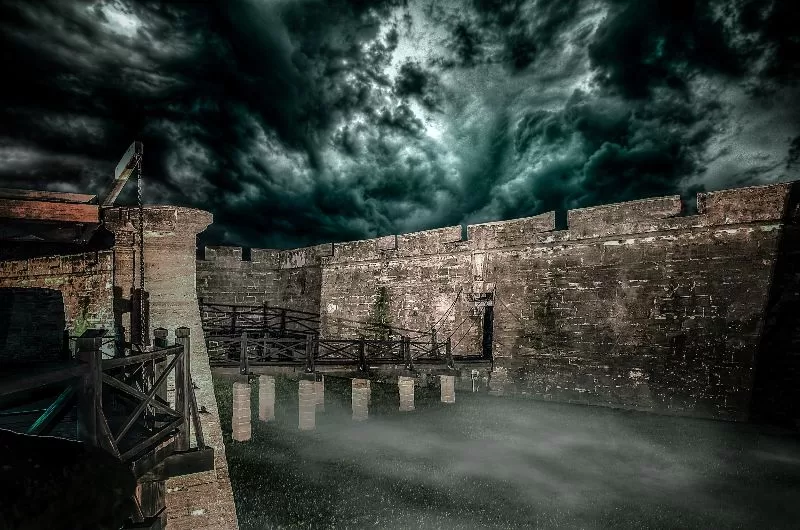
St. Augustine is the oldest European-established city in the country, and it certainly feels that way from the moment you step into the narrow streets of the old Spanish quarter. The buildings press close together, the stone worn smooth by centuries of salt air, and the whole place carries a weight that newer cities simply don’t have.
The Castillo de San Marcos sits at the waterline, a Spanish colonial fort that has been standing since 1672. Its walls are built from coquina, a stone made of compressed shells and coral quarried from the barrier island across the inlet, and the material has a strange quality — soft enough that cannonballs would sink into it rather than shatter it, which is part of why the fort survived.
Step into the underground chambers and the temperature drops immediately, even in summer. The smell is of sulfur and salt and something older, and the darkness in there is overwhelming, pressing on you heavily. Guards stationed in those rooms during the fort’s active years reportedly went half mad from the isolation.
Down the coast, the St. Augustine Lighthouse rises white above the salt marshes. Two young girls drowned on the construction site in the 1870s, slipping from a supply cart into the water below.
The lighthouse has operated since 1874, and the people who work there after hours describe sounds that don’t have obvious explanations. Laughter, mostly – the kind that seems to be coming from just outside wherever you’re standing, moving when you move toward it.
The city also holds the Huguenot Cemetery, one of the oldest Protestant burial grounds in Florida, where yellow fever victims were buried in mass graves during the epidemics of the 1800s. Night tours through the cemetery are a St. Augustine staple, and it remains one of the most talked-about haunted places in Florida. For a lighter side of unusual Florida travel, you can also plan a few offbeat Florida stops between historic cities and ghost tours.
Tampa
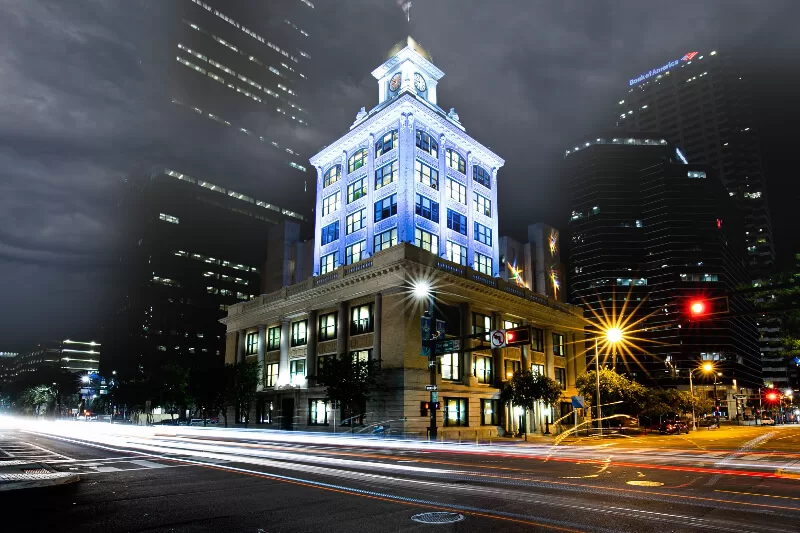
Ybor City was built by immigrants — Cuban, Spanish, Italian — who came to roll cigars in the factories that lined the streets in the late 1800s. It was a neighborhood that ran on hard labor and community solidarity, and, underneath that, organized crime. The buildings that remain from that era are beautiful in a worn-down way, made of brick and wrought iron, holding onto the atmosphere of the industrial period the way old wood holds onto smoke. Today, Ybor City remains one of the most recognizable haunted Tampa destinations, attracting visitors interested in paranormal history and ghost tours year-round.
The Cuban Club on Seventh Avenue is one of the grandest buildings in the neighborhood, built as a social hall for the Cuban immigrant community in 1917. It has a ballroom, a theater, a grand staircase, and a history of reported activity that the staff has mostly stopped trying to explain away.
A boy in period clothing has been observed on the theater stage, bouncing a ball in the dark after the building is locked. A woman in a white dress appears on the staircase and descends partway before she is simply gone. Neither of them responds to anyone watching. They seem to be doing what they were doing before anyone started paying attention.
A few blocks away, the old Don Vicente building, a former hotel built by one of Ybor City’s founding figures, has its own reputation. Guests over the years have reported an elevator that travels between floors with nobody inside it, and the sound of heavy boots on empty corridors late at night. The neighborhood as a whole feels different after dark, heavier, the streets that fill with bar crowds on weekends taking on a different character when they empty out.
Orlando
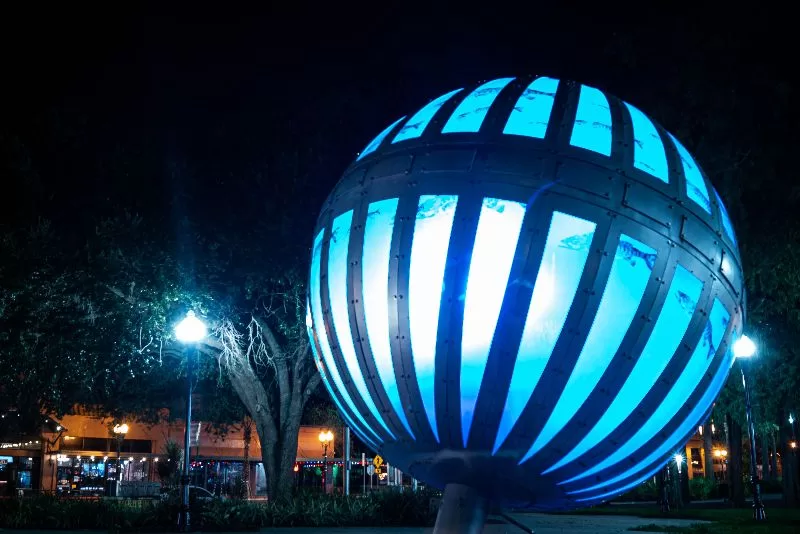
Most people know Orlando as theme parks and chain restaurants, along with the particular kind of sensory overload that comes with all of that. Drive ten minutes outside the tourist corridor, and that version of the city disappears fast. The scrubland comes back quickly, flat and dry, and downtown Orlando has bones that predate all of it by a hundred years. Beyond the tourist attractions, haunted Orlando locations and historic cemeteries reveal a much darker side of the city’s past.
The Rogers Building is one of the older commercial buildings in the city, and the cold spots inside it have been reported for long enough that they’ve become part of the building’s identity. Office workers describe drafts in rooms with sealed windows, the kind of chill that appears and disappears without explanation. Papers have reportedly moved on desks in spaces where the air conditioning was off, and every window was shut. Nobody has produced a satisfying conventional explanation.
Greenwood Cemetery sits on the edge of downtown and holds graves going back to the 1880s, the pioneer-era dead buried under moss-covered headstones in the shade of old oak trees. It is a legitimately beautiful place during the day. At night, though, people who bring specialized audio equipment play back recordings that contain voices that weren’t audible when they were made. Murmuring, mostly, indistinct but clearly vocal. The cemetery runs regular nighttime events, and the waiting list for them is long.
Fort Lauderdale
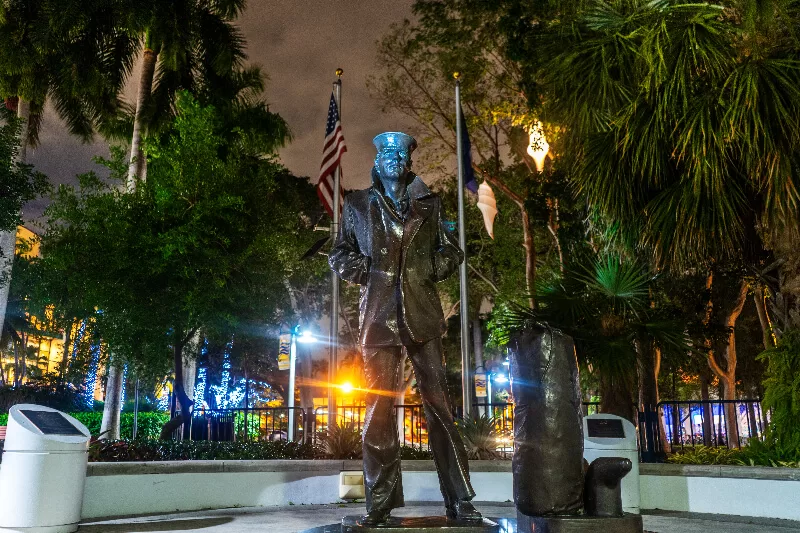
Fort Lauderdale is a canal city, its waterways modeled deliberately on Venice, and the water that looks like a luxury amenity now was once a serious danger for early settlers. The hurricanes that came through in the early 1900s killed people who had no safe ground to retreat to, and the low-lying geography made flooding catastrophic in ways that are hard to picture now.
Fort Lauderdale has no shortage of haunted places, historic landmarks, and unsettling local legends.
The Stranahan House has stood on the New River since 1901, built by Frank Stranahan, one of the first permanent settlers in the area. He ran a trading post, worked with the Seminole, and built what became the social center of a very young and isolated community. When the Depression hit, his finances collapsed, and his mental state went with them. One morning in 1929, he tied a weight around himself and walked into the same river he had looked at from his porch for nearly thirty years.
His wife, Ivy, stayed. She lived alone in the house for years after his death and died there herself in 1971. The house is a museum now, and tour guides have been reporting the same things for decades: the smell of pipe tobacco in empty rooms, a floral perfume in spaces where nobody has been wearing perfume, a particular chill in the upstairs rooms that appears without regard to the weather outside. People who visit describe a feeling of being watched that starts the moment they walk in and doesn’t let up.
The house is small, full of original furniture, and it feels occupied in a way that goes beyond the masses of visitors. Whether that means anything is up to whoever is standing in it and their own perception.
Miami
Miami builds fast and builds on top of things. Construction crews working along the Miami River in the 1990s tore through Tequesta burial mounds that had been undisturbed for centuries, uncovering artifacts and human remains in the process of putting up condominiums. The developments went ahead. The city keeps moving.
The Biltmore Hotel in Coral Gables opened in 1926 and quickly became a playground for wealthy visitors and the criminal class that catered to them. A man was shot dead in the penthouse during a card game in 1929, killed by someone who was never charged with the crime. The hotel has been renovated and rebranded multiple times since, but the penthouse floor has a reputation among staff that renovations haven’t touched. Guests have reported cold spots, sounds from empty rooms, and a general unease that the rest of the hotel, with its pools and its architecture and its perfectly maintained grandeur, does nothing to explain.
On South Beach, the Villa Casa Casuarina sits quietly on Ocean Drive. Gianni Versace was shot on its front steps in July 1997, and the building has cycled through owners and purposes since then, having been a hotel, restaurant, and tourist site. People who spend time near the entrance describe something about the air there that doesn’t match the busy street around it: a stillness or something that the noise of the traffic and tourist crowds just doesn’t penetrate. Whether that’s history or architecture or something else is hard to say.
Key West
The haunted Crown Plaza Hotel in Key West – Copyright US Ghost Adventures
Key West is the end of the road, a small coral island between the Gulf and the Atlantic where U.S. 1 runs out of continent. It sells a rum-soaked fantasy of permanent vacation, and that part is real enough — but so is the other part.
Yellow fever swept through this island repeatedly in the 1800s, killing fast enough that the dead sometimes went into the ground with no markers and no ceremony, buried wherever there was space. The Key West Cemetery holds some of those dead, and it is an unusual place even by cemetery standards. Because the island’s coral bedrock makes deep burial impossible, many of the graves are above ground, the tombs stacked and close together in a space that the living neighborhood has grown around on all sides. People are buried under the streets here, under the foundations of buildings, under ground that was paved over before anyone thought to mark what was there.
Fort East Martello is a Civil War-era fort that never saw combat, converted into a museum, and it smells like old stone and cut grass and the particular mustiness of a building that has been standing in salt air for a very long time. What makes it so interesting is its permanent resident, Robert the Doll.
Robert the Doll is in a case near the back. He is smaller than anyone expects, maybe three feet tall, stuffed with straw, dressed in a small sailor suit that has been on him for over a century. His face has an expression that reads as puzzled more than threatening, which is, in a weird way, infinitely worse.
Robert was given to a boy named Gene Otto around 1904, and the stories about what followed have been told so many times they’ve passed into legend. The doll moving between rooms, the expressions changing when nobody was watching, the boy’s behavior becoming erratic in ways his parents couldn’t explain.
Gene kept Robert his entire life and left him in the house when he died. The house’s next owners donated him to the fort, and the letters started accumulating on the wall around his case shortly after.
Hundreds of them now, handwritten apologies from visitors who photographed him without asking permission first. The letters come from Germany, Japan, Ohio, Brazil – everywhere, really. They describe car accidents, job losses, relationships falling apart, the kind of grinding bad luck that doesn’t have an obvious cause.
FAQ
What is the most haunted city in Florida?
St. Augustine is often considered the most haunted city in Florida due to its long colonial history, historic cemeteries, and paranormal legends.
Are ghost tours popular in Florida?
Yes, ghost tours are popular throughout Florida, especially in cities like St. Augustine, Tampa, and Orlando.
Is St. Augustine really haunted?
Many visitors and locals report paranormal experiences at places like the St. Augustine Lighthouse and Castillo de San Marcos.
Final Thoughts
Florida may be known for sunshine, beaches, and theme parks, but its history tells a much darker story. From the centuries-old streets of haunted St. Augustine to the eerie atmosphere of Ybor City and the historic cemeteries of Orlando, these paranormal Florida destinations continue to attract visitors looking for ghost stories, haunted landmarks, and unforgettable ghost tours. Whether you believe in the supernatural or simply enjoy exploring historic places with a darker past, Florida offers no shortage of chilling experiences.