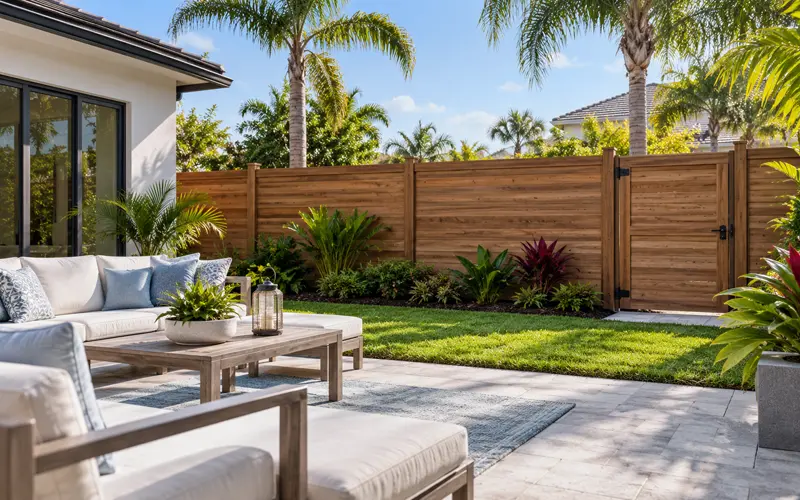
A backyard fence can provide privacy, create a safer place for pets, define property lines, and make an outdoor space feel more finished. However, the right fence for one home may be completely wrong for another. A family trying to contain a small dog has different needs than someone who wants an unobstructed pool view or a private place to relax.
Comparing the different types of fences for backyards is easier when you begin with how the yard needs to function. Material matters, but so do height, spacing, gate placement, maintenance, and the amount of privacy each design provides.
I think a fence should be treated as part of the entire outdoor layout rather than a barrier added at the end. When it complements your landscaping, patio, lighting, and other practical backyard upgrades, it can improve both the appearance and everyday use of the yard.
How to Choose the Right Backyard Fence
Before comparing materials and styles, decide what you expect the fence to accomplish. Most homeowners have more than one goal, but identifying the main priority will help narrow the choices.
Consider whether you need a fence for:
- Complete or partial privacy
- Children or pet containment
- Pool safety
- Property-line definition
- Added security
- Reduced maintenance
- An open view
- A decorative backdrop for landscaping
- Separation between backyard activity zones
A solid privacy fence may be ideal beside a patio but feel too enclosed around a scenic yard. An aluminum fence can protect the perimeter while preserving the view, but it will not hide neighboring properties. The best choice balances function, appearance, maintenance, and cost.
Backyard Fence Materials at a Glance
| Fence material | Privacy | Maintenance | Best suited for |
|---|---|---|---|
| Wood | Partial to complete | Moderate to high | Privacy, customization, traditional or modern yards |
| Vinyl | Partial to complete | Low | Low-maintenance privacy and clean designs |
| Aluminum | Minimal | Low | Pools, open views, decorative boundaries |
| Steel | Minimal unless combined with panels | Moderate | Strength, security, decorative fencing |
| Chain-link | Minimal unless privacy slats are added | Low | Pet containment, practical boundaries, larger yards |
| Composite | Partial to complete | Low to moderate | Wood-like appearance with less routine upkeep |
Prices vary considerably according to fence height, material quality, yard conditions, labor costs, gate count, and installation method. Set a realistic budget before requesting estimates, particularly if the project will be funded from savings or investments. Educational resources from VectorVest can help investors evaluate factors involved in deciding when to sell stocks instead of making a rushed decision to meet a contractor’s payment schedule. Compare complete fence estimates rather than looking only at the price of the panels.
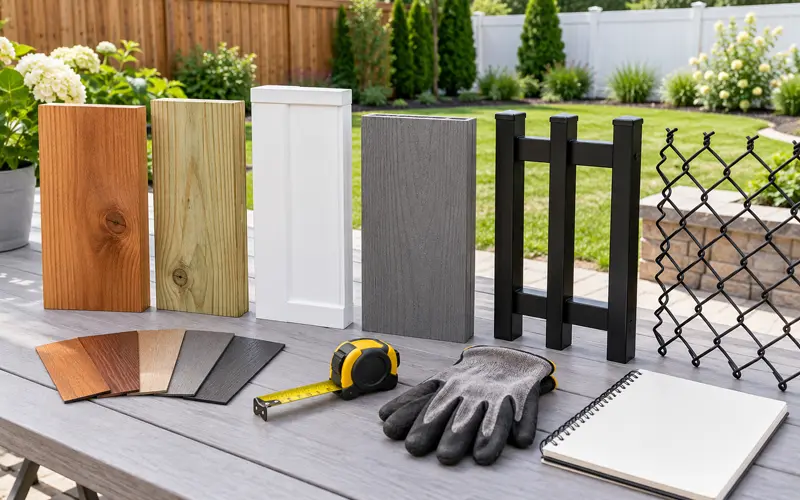
Wood Fences
Wood remains one of the most versatile backyard fence materials. Before installing a wooden fence, compare both the type of lumber and the construction style because each choice affects privacy, appearance, maintenance, and cost. Wood can be used for traditional picket, solid privacy, shadowbox, horizontal, lattice-top, and custom designs, then stained or painted to coordinate with the home and surrounding outdoor features.
The tradeoff is maintenance. Sun, moisture, insects, and ground contact can affect untreated or poorly maintained wood. Staining or sealing may help preserve its appearance, but the appropriate maintenance schedule depends on the wood, finish, and local climate. An exterior wood stain and sealer can help protect the fence while adding a natural, painted, or semi-transparent finish.
Pressure-Treated Pine
Pressure-treated pine is widely used for backyard fences because it is generally more affordable than naturally decay-resistant woods. The treatment helps protect the lumber from fungal decay and insect damage.
The EPA’s overview of residential wood preservatives explains that treatments such as alkaline copper quaternary and copper azole are registered for outdoor products, including fence posts and fencing. Allow treated lumber to dry as recommended before applying paint or stain, and follow the product manufacturer’s instructions.
Pressure-treated pine works well for:
- Full privacy fences
- Board-on-board designs
- Shadowbox fences
- Picket fences
- Large fenced areas where material cost matters
Cedar
Cedar is popular for its warm color, distinctive grain, and natural resistance to decay. It can create a polished fence without paint, although an exterior finish can help maintain the original color. Without a finish, cedar gradually develops a weathered gray appearance.
Cedar usually costs more than pressure-treated pine, but many homeowners choose it when the fence will be a prominent part of the backyard design.
Cypress
Cypress is another attractive choice, particularly in Southern regions where it may be more readily available. It contains natural compounds that help it resist decay and insects, although quality, availability, and price can vary.
Its subtle grain works with traditional homes, gardens, tropical landscaping, and more relaxed backyard designs.
Redwood
Redwood offers rich color and natural resistance to decay, but it is usually one of the more expensive wood fencing choices. Availability also varies by region, making it more common in some parts of the country than others.
For homeowners considering redwood, cedar, or cypress, comparing local availability may be just as important as comparing the wood itself.
Vinyl Fences
Vinyl fencing is a popular alternative to wood when low maintenance is a priority. It does not need routine staining and is available in full privacy, semi-private, picket, and decorative styles.
Cleaning typically involves water and a gentle household cleaner. However, damaged sections may be harder to repair individually than wood boards, and product quality can make a noticeable difference in rigidity, color retention, and durability.
Vinyl is a strong contender for homeowners who want:
- A clean, uniform appearance
- Full backyard privacy
- Minimal routine upkeep
- White, tan, gray, or wood-look panels
- A fence that coordinates with modern outdoor spaces
Solid vinyl panels can also make a small yard feel more enclosed. Using semi-private panels, lattice detailing, or landscaping along the fence may soften the effect.
Aluminum Fences
Aluminum fencing creates a defined barrier without blocking the view. Its open design makes it especially useful around pools, waterfront properties, gardens, and landscaped yards.
Aluminum is rust-resistant and generally requires little maintenance. It is available in several colors and decorative designs, but it does not provide meaningful privacy unless it is paired with plants or another screening material.
In a thoughtfully planned yard, an open fence can allow Florida-friendly landscaping to remain visible while still creating a clear boundary.
Steel and Ornamental Metal Fences
Steel fencing offers greater strength than many lightweight decorative materials. It can provide an elegant, traditional appearance or a cleaner modern design, depending on the rails, posts, and finials selected.
Protective coatings help limit corrosion, but chipped or damaged finishes should be addressed before rust spreads. Steel is often more expensive than aluminum and may require more maintenance, particularly in humid or coastal conditions.
Metal fencing works best when visibility, strength, and architectural detail matter more than privacy.
Chain-Link Fences
Chain-link fencing is a practical option for enclosing a large yard, creating a dog run, or establishing a boundary without installing solid panels. It is durable, relatively easy to maintain, and often less expensive than decorative or full-privacy materials.
Traditional galvanized chain-link has a utilitarian appearance, while black or green vinyl-coated versions tend to blend into landscaping more easily. Privacy slats or screening fabric can reduce visibility, although the finished look will differ from a solid wood or vinyl fence. Homeowners who want more coverage without replacing the entire fence can add chain-link privacy slats in a color that complements the house and landscaping.
For pet owners, height is only part of the decision. Check the bottom edge for digging opportunities, measure openings around gates, and consider whether nearby furniture or structures could become climbing points. Secure outdoor access also supports a safer, more comfortable home for pets.
Composite Fences
Composite fencing combines wood fibers with plastic or other manufactured components. It is designed to create a wood-like appearance without the same staining and sealing routine required by many natural wood fences.
Composite panels can provide excellent privacy and a polished appearance. They are often heavier and more expensive than basic wood or vinyl options, so the post system and installation method are important.
Color choices may be more limited than painted wood, but composite can be appealing when long-term maintenance is a bigger concern than the initial price.
Popular Backyard Fence Styles
The material determines how a fence performs, while the style determines how it looks and how much privacy it provides. Several styles can be built from more than one material.
Solid Privacy Fence
A solid privacy fence places boards or panels closely together to block the view. It works well around patios, pools, outdoor dining areas, and yards located close to neighboring homes.
Because a tall solid fence can make a compact yard feel smaller, landscaping and color should be planned carefully. Lighter finishes, narrow planting beds, and layered greenery can prevent the fence from visually overpowering the space.
Board-on-Board Fence
Board-on-board fencing overlaps vertical boards so gaps are less likely to appear as the wood expands and contracts. It offers more complete coverage than basic side-by-side boards and looks finished from both sides when designed as a neighbor-friendly fence.
The extra lumber generally increases the cost, but the design is appealing when privacy is the main goal.
Shadowbox Fence
A shadowbox fence alternates boards on opposite sides of the rails. This creates partial privacy while allowing more airflow and light than a solid fence.
The finished appearance on both sides makes shadowbox fencing useful along shared property lines. From an angle, the boards limit visibility, but the fence is not completely private when viewed straight through the openings.
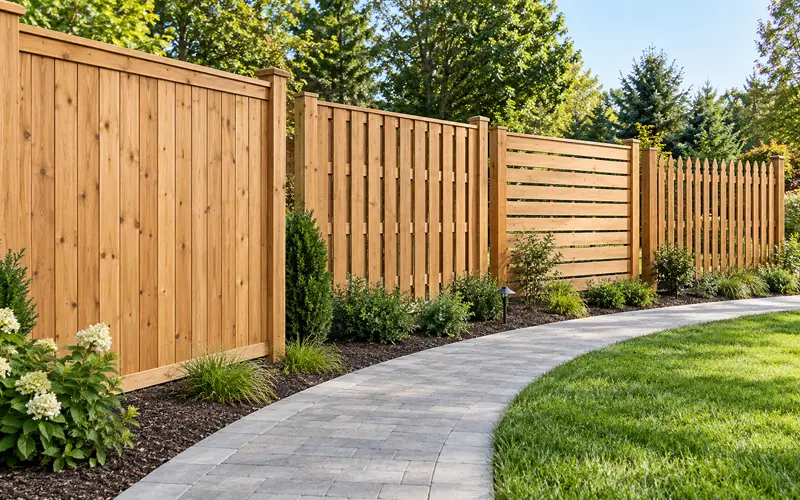
Horizontal Fence
Horizontal fences use boards or slats installed parallel to the ground. The long lines create a modern appearance that works well with contemporary homes, streamlined patios, and geometric landscaping.
Installation needs to account for the span and support of the boards. Poorly supported horizontal boards may sag or warp, so the post spacing and lumber quality are important.
Picket Fence
Picket fencing defines a boundary without closing off the yard. Although white pickets are the classic version, picket fences can also be made from stained wood, vinyl, aluminum, or composite materials.
This style is decorative and welcoming, but the spacing must be evaluated carefully if the fence will contain children or pets.
Split-Rail Fence
Split-rail fencing has an open, rustic appearance and works well around larger yards, gardens, and properties with a natural landscape. It uses fewer materials than a solid privacy fence but offers very little containment on its own.
Wire mesh can be attached to the inside when a more secure enclosure is needed without sacrificing the open appearance.
Lattice-Top Fence
A lattice-top fence combines a solid or semi-private lower panel with an open decorative section. It adds height and visual interest while allowing some light and airflow near the top.
Lattice can make a tall privacy fence feel less severe, particularly around a patio or garden.
Special Considerations for Florida Backyards
Florida conditions can be demanding on outdoor materials. Intense sunlight, frequent rain, humidity, termites, salt air in coastal areas, and tropical weather should all influence the decision.
When comparing fence estimates, ask contractors about:
- Materials appropriate for local moisture and insect exposure
- Fasteners and hardware suited to exterior conditions
- Post depth and installation for the site
- Drainage around posts
- Gate reinforcement
- Local wind requirements
- Product and installation warranties
- Replacement options for damaged panels
No fence material is completely maintenance-free. Wood finishes need attention, metal coatings should be checked for damage, and vinyl or composite panels still need occasional cleaning. Choosing a fence you can realistically maintain is more useful than selecting one based only on its appearance when it is new. Easy-to-install solar fence lights can improve visibility near gates and walkways without requiring electrical wiring throughout the yard.
Thoughtful outdoor landscape lighting can also improve visibility near gates and walkways while helping the fence feel connected to the rest of the backyard after dark.
Pool Fence Requirements
A decorative backyard fence does not automatically qualify as a pool safety barrier. Height, openings, gate direction, latching mechanisms, climbable components, and clearance beneath the fence may all be regulated.
The U.S. Consumer Product Safety Commission’s pool barrier guidelines provide general safety recommendations, but homeowners must also confirm current state and local requirements. In Florida, the applicable building code, municipality, county, and homeowners association may impose additional rules.
Never assume an existing property-line fence satisfies pool requirements without having it evaluated.
Plan the Fence Before Installation
A little planning can prevent expensive mistakes. Start by confirming the property lines rather than assuming an existing hedge, old fence, or mowing pattern marks the legal boundary.
Check local permit and setback requirements, utility easements, drainage routes, and homeowners association rules. Before posts are installed, submit a locate request through 811 Before You Dig so underground utilities can be marked.
Gate placement also deserves careful thought. Walk through the yard and consider how people move between the house, driveway, patio, pool, storage area, and side yards. A gate that looks logical on a drawing may be inconvenient when carrying groceries, moving trash cans, or bringing lawn equipment into the backyard.
Ask for a written estimate that identifies:
- Fence material and grade
- Total linear footage
- Fence height
- Post material and spacing
- Number and width of gates
- Hardware and fasteners
- Removal of existing fencing
- Permit responsibilities
- Cleanup and debris removal
- Labor and material warranties
Choosing the Best Fence for Your Backyard
There is no single fence material or style that works for every property. Wood offers the most customization, vinyl provides low-maintenance privacy, aluminum preserves an open view, chain-link creates an economical enclosure, and composite combines privacy with a wood-like appearance.
Begin with the problem the fence needs to solve. Then compare the materials that meet that need, the maintenance they require, and how each option will look with the home and landscaping.
The right backyard fence should provide more than a boundary. It should make the outdoor space safer, more comfortable, and better suited to the way it is used every day.